
CSMD Forensic & Clinical Associates is a private practice founded to bring clarity, integrity, and expertise to the intersection of mental health and the law. My work is grounded in the belief that forensic and clinical evaluations should not only meet professional standards but also serve the people and systems that depend on them, with precision, fairness, and respect for complexity.

CSMD Forensic and Clinical Associates
MaCSMD Forensic & Clinical Associates is the private practice I founded to bring clarity, integrity, and expertise to the intersection of mental health and the law. My work is grounded in the belief that forensic and clinical evaluations should not only meet professional standards but also serve the people and systems that depend on them — with precision, fairness, and respect for complexity.ke it visible.
Define what “it” is — name the item, data, or behavior you want seen.
Choose the visibility channel — decide whether visibility requires a display, report, alert, signage, or data feed.
Establish measurable criteria — set specific attributes to indicate visibility (location, size, format, frequency, color/contrast, metadata).
Assign responsibility — designate who will create, maintain, and monitor the visible element.
Implement accessibility and compliance — ensure visibility meets accessibility standards (readable fonts, color contrast, screen-reader labels) and any legal or privacy requirements.
Set monitoring and verification — schedule checks, audits, or automated tests to confirm continued visibility and log results.
Communicate changes — document and notify stakeholders of visibility updates and how to interpret the visible signals.
Example checklist for making a safety notice visible in a facility:
Notice text finalized and approved.
Printed at minimum 18-point sans-serif font
CSMD Forensic & Clinical Associates is the private practice I founded to bring clarity, integrity, and expCSMD FCSMD Forensic & Clinical Associates is the private practice I founded to bring clarity, integrity, and expertise to the intersection of mental health and the law. My work is grounded in the belief that forensic and clinical evaluations should not only meet professional standards but also serve the people and systems that depend on them — with precision, fairness, and respect for complexity.orensic & Clinical Associates is the private practice I founded to bring clarity, integrity, and expertise to the intersection of mental health and the law. My work is grounded in the belief that forensic and clinical evaluations should not only meet professional standards but also serve the people and systems that depend on them — with precision, fairness, and respect for complexity.ertise to the intersection of mental health and the law. My work is grounded in theCSMD Forensic & Clinical Associates is the private practice I founded to bring clarity, integrity, and expertise to the intersection of mental health and the law. My work is grounded in the belief that forensic and clinical evaluations should not only meet professional standards but also serve the people and systems that depend on them — with precision, fairness, and respect for complexity. belief that forensic and clinical evaluations should not only meet professional standards but also serve the people and systems that depend on them — with precision, fairness, and respect for complexity.
Education/ Background
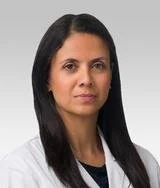
Chandrika Shankar M.D., is a double board-certified psychiatrist, practicing general psychiatry and forensic psychiatry for the past 15 years. She completed her psychiatry residency training from Mount Sinai (Cabrini) Medical Center in 2007 and Forensic Psychiatry Fellowships from Yale University in 2008. Since then, she has had varied experience in civil and criminal forensic matters that include testamentary capacity, guardianship, involuntary treatment, capacity to stand trial, extreme emotional disturbance, and evaluations pertaining to mitigation and insanity assessments.
For eight years, Dr. Shankar worked as a Consulting Forensic Psychiatrist for the Department of Mental Health and Addiction Services (DMHAS) in Connecticut. During that time, her primary role was overseeing patients who had been deemed not guilty by reason of insanity (NGRI). In that capacity, she worked with primary treatment teams in the state facility conducting risk management assessments, providing guidance for safe transition of patients to the community, while balancing the legal requirement, patient rights and public safety. She testified in front of Psychiatry Security Review Board (PSRB) and Superior Court on a regular basis, updating the courts of patients’ progress. As a consultant, she also performed numerus risk management consultations for challenging patients in various hospitals across the state. She was also a faculty member of the forensic fellowship where she trained and supervised forensic fellows. Dr. Shankar later held the position of Residency Training Director for Creighton Psychiatry Department in Phoenix. During that time, she was a consultant forensic psychiatrist for the Tribal Court in Maricopa County and performed capacity to stand trial evaluations. She also had a forensic private practice performing civil evaluations such as testamentary capacity assessments, capacity to consent for marriage and need for guardianship.
Since moving to Chicago, Dr. Shankar has held numerous leadership positions in clinical and academic settings. She is closely involved with the teaching and training of medical students and residents. She currently serves as the medical director of the inpatient psychiatric unit and is a faculty member of the forensic fellowship at Northwestern.
t forensic psychiatrist for the Tribal Court in Maricopa County and performed capacity to stand trial evaluations. She also had a forensic private practice performing civil evaluations such as testamentary capacity assessments, capacity to consent for marriage and need for guardianship.
Since moving to Chicago, Dr. Shankar has held numerous leadership positions in clinical and academic settings. She is closely involved with the teaching and training of medical students and residents. She currently serves as the medical director of the inpatient psychiatric unit and is a faculty member of the forensic fellowship at Northwestern.
Conditions Treated
Conditions 1
Conditions
Conditions